

TL;DR
- Minor sanitary valve failures can lead to major consequences, including contamination risk, batch loss, and downtime in life sciences manufacturing.
- Reliable valve performance is essential for compliance, product quality, and maintaining uptime in high-cycle, hygienic applications.
- Modern sanitary valves with integrated monitoring and control support predictive maintenance and digital transformation initiatives.
- The right valve selection, proper integration, and proactive maintenance reduce risk while improving efficiency and operational reliability.
Small Failures, High Consequences
Sanitary valve performance is directly tied to product quality, compliance, and uptime. As production volumes increase and processes become more complex, facilities need valve solutions that deliver consistent performance under strict hygienic requirements.
Modern sanitary valve design, combined with remote monitoring and advanced control integration, provides a path to more reliable and compliant operations.
Why Sanitary Valve Performance Matters in Modern Operations
Life sciences facilities operate under strict regulatory frameworks where process deviations are not tolerated. Valve performance plays a critical role in maintaining control across sterile and hygienic processes.
Uptime and Batch Continuity
Valve failures during production or cleaning cycles can halt operations. High-cycle applications, such as media transfer and CIP systems, demand valves that can perform reliably without degradation.
Safety and Compliance
Regulatory bodies require full traceability and validation of process equipment. Sanitary valves must meet strict hygienic standards, including cleanability and material compatibility. Improper valve performance can lead to contamination events and compliance violations.
Cost Control
Batch loss due to contamination or process deviation is expensive. In addition to lost product, facilities face investigation costs and potential delays in product release.
Efficiency and Digital Transformation
Facilities are adopting remote monitoring and predictive maintenance strategies. Integrating sanitary valves into asset reliability and monitoring systems enables early detection of wear, reducing unplanned downtime.
How Sanitary Valves Work in Hygienic Processing Systems
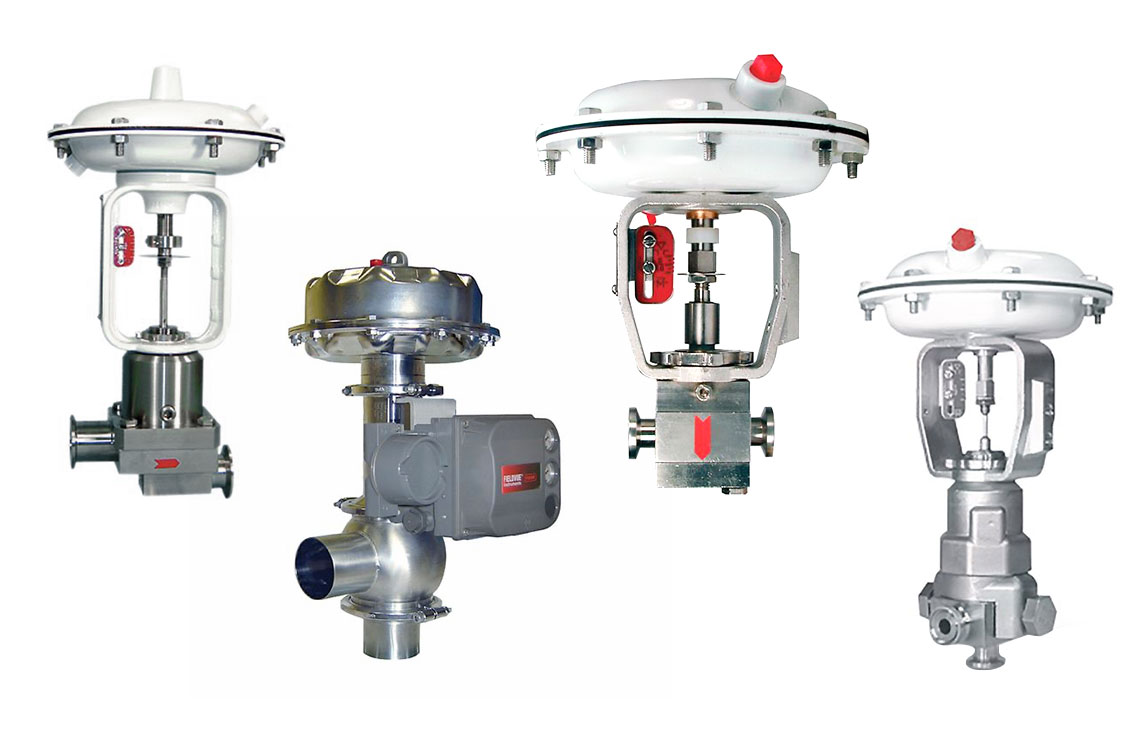
Sanitary valves, such as the Fisher™ Baumann™ 8000 series, are designed to meet strict hygienic requirements while maintaining precise control over process flow. Their design minimizes dead legs, supports clean-in-place and steam-in-place operations, and ensures consistent sealing.
Key Sanitary Valve Types
-
Sanitary Diaphragm Valves
Widely used in pharmaceutical applications. These valves isolate the process fluid from the actuator using a flexible diaphragm. Ideal for sterile applications due to minimal crevices and strong sealing performance. -
Sanitary Butterfly Valves
Common in high-flow applications. These valves offer compact design and fast operation. Suitable for non-critical isolation and throttling where full sterility is not required. -
Sanitary Ball Valves
Provide tight shutoff and low pressure drop. Used in applications where flow efficiency is critical, though they require careful design to maintain hygienic standards. -
Sanitary Relief Valves
Protect systems from overpressure conditions. Critical for maintaining safety in closed processing systems.
Components and System Integration
A typical sanitary valve assembly includes:
-
Valve body constructed from polished stainless steel
-
Elastomer diaphragm or seal designed for compatibility with process fluids
-
Actuator, either pneumatic or electric
-
Position feedback and instrumentation for control integration
These valves are integrated into process control systems to ensure precise operation. Control signals adjust valve position based on process conditions such as flow rate, pressure, and temperature.
Data Flow and Monitoring
Modern sanitary valve systems support remote monitoring through instrumentation and control platforms:
-
Sensors capture process conditions and valve position
-
Control systems adjust valve operation in real time
-
Monitoring platforms track valve performance and cycle counts
-
Maintenance teams receive alerts for abnormal behavior
This integration supports predictive maintenance and reduces the risk of unexpected failures.
Manufacturers such as Emerson Electric provide hygienic valve technologies with integrated sensing and diagnostics, enabling facilities to align valve performance with broader digital transformation initiatives.
Real-World Applications in Life Sciences
Pharmaceutical Manufacturing:
Sterile Processing
Sterile drug production requires precise control over fluid handling. Sanitary diaphragm valves are used extensively in these environments.
-
Maintain aseptic conditions during media transfer with products like Crane SAUNDERS® Aseptic Diaphragm Valves
-
Support CIP and SIP cycles without disassembly
-
Provide reliable sealing under repeated sterilization
Outcome: Reduced contamination risk and improved batch consistency.
Bioprocessing: High-Cycle Applications
Bioreactors and downstream processing systems involve frequent valve operation.
-
Diaphragm valves handle high cycle counts without failure
-
Remote monitoring tracks wear and performance trends
-
Automated control ensures consistent process conditions
Outcome: Increased uptime and reduced maintenance interruptions.
Clean Utility Systems: Water for Injection
Water for injection systems require continuous circulation and strict hygiene.
-
Sanitary valves maintain flow and prevent stagnation
-
Relief valves protect against pressure fluctuations
-
Control valves regulate temperature and flow
Outcome: Reliable utility supply that meets regulatory standards.
Best Practices for Sanitary Valve Performance
- Select valve types based on application criticality and hygiene requirements
- Validate materials for compatibility with cleaning and sterilization processes
- Minimize dead legs through proper installation and design
- Integrate valves into centralized monitoring systems for real-time visibility
- Track valve cycle counts and performance metrics
- Use predictive maintenance strategies to reduce downtime
- Align valve selection with overall digital transformation goals
Key Takeaways: Reliable Valve Performance Is Essential for Compliance and Uptime
By selecting the right valve technologies, integrating them into control and monitoring systems, and applying predictive maintenance strategies, facilities can improve reliability and reduce risk.
As processes become more complex and production demands increase, sanitary valves will continue to play a critical role in maintaining safe, efficient, and compliant operations.