
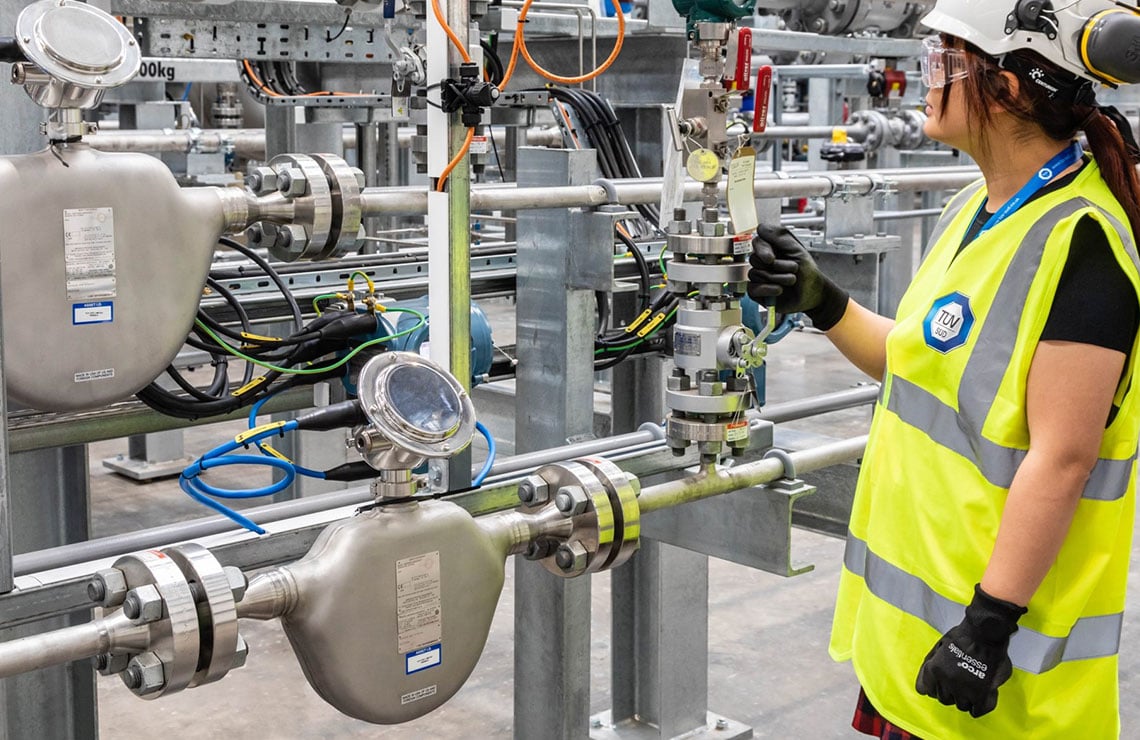
Coriolis flow and density meters have become critical tools for organizations seeking to reduce uncertainty and unlock operational efficiency. Their ability to directly measure mass flow and density provides a level of precision that traditional volumetric technologies often cannot achieve. Understanding how these instruments work, where they deliver the most value, and how to manage their lifecycle helps industrial teams improve both technical performance and business outcomes.
What Is the Purpose of the Coriolis Flow Meter?
The primary purpose of a Coriolis flow meter is to provide direct measurement of mass flow. Unlike volumetric devices that infer mass from volume and density assumptions, Coriolis meters measure mass flow based on physical principles. This distinction is critical in processes where fluid properties vary due to temperature, pressure, or composition changes.
In practical terms, this means Coriolis meters deliver consistent and reliable data even when process conditions fluctuate. For operations handling chemicals, hydrocarbons, food products, or pharmaceuticals, this reliability supports tighter control, reduced waste, and improved compliance.
Coriolis meters also measure fluid density directly. This additional insight allows operators to detect changes in product composition, identify contamination, and validate process consistency without adding separate instruments.
What Is the Operating Principle of a Coriolis Flow Meter?
This operating principle allows Coriolis meters to measure mass flow independently of fluid properties such as viscosity or conductivity. Density is calculated by analyzing the natural frequency of the vibrating tubes, which changes based on the mass of the fluid inside them.
From an operational perspective, this principle translates into high accuracy, repeatability, and stability. These characteristics are especially valuable in regulated industries where measurement confidence directly supports safety and quality objectives.
Why Coriolis Mass Flow Measurement Improves Efficiency
This simplicity supports better control strategies. When control systems receive reliable mass flow data, they respond more effectively to process changes. This leads to smoother operation, fewer corrective actions, and reduced energy consumption.
For operations leaders, improved efficiency shows up in measurable ways. Product losses decrease, rework is reduced, and operators spend less time troubleshooting discrepancies between expected and actual performance.
Does a Coriolis Flow Meter Measure Density?
Density measurement is a natural extension of the Coriolis principle. As fluid density changes, the vibration characteristics of the flow tube change as well. By monitoring these changes, the meter calculates density in real time.
This capability is particularly valuable in applications where fluid composition matters. In blending operations, density data helps verify ratios and detect deviations early. In custody transfer and batching applications, density measurement supports accurate accounting and traceability.
Density measurement also contributes to quality assurance. Subtle changes in density can indicate upstream issues such as contamination, incomplete reactions, or temperature control problems. Detecting these changes early allows operators to intervene before quality or safety is compromised.

Industrial Applications of Coriolis Meters
Coriolis meters are widely used across industries where accuracy and reliability are critical.
In oil and gas operations, they support mass balance, blending, and custody transfer applications where financial and regulatory stakes are high. In chemical processing, Coriolis meters provide consistent measurement of aggressive or variable fluids, supporting tighter process control.
Life sciences and food & beverage production benefit from Coriolis meters due to their hygienic designs and ability to support validation and compliance requirements. Power generation and utilities use Coriolis technology in fuel measurement and additive dosing where precision directly affects efficiency and emissions.
Across these applications, industrial Coriolis meters contribute to improved operational confidence and reduced risk.
What Are the Disadvantages of a Coriolis Flow Meter?
While Coriolis meters offer significant advantages, understanding their limitations is essential for proper application.
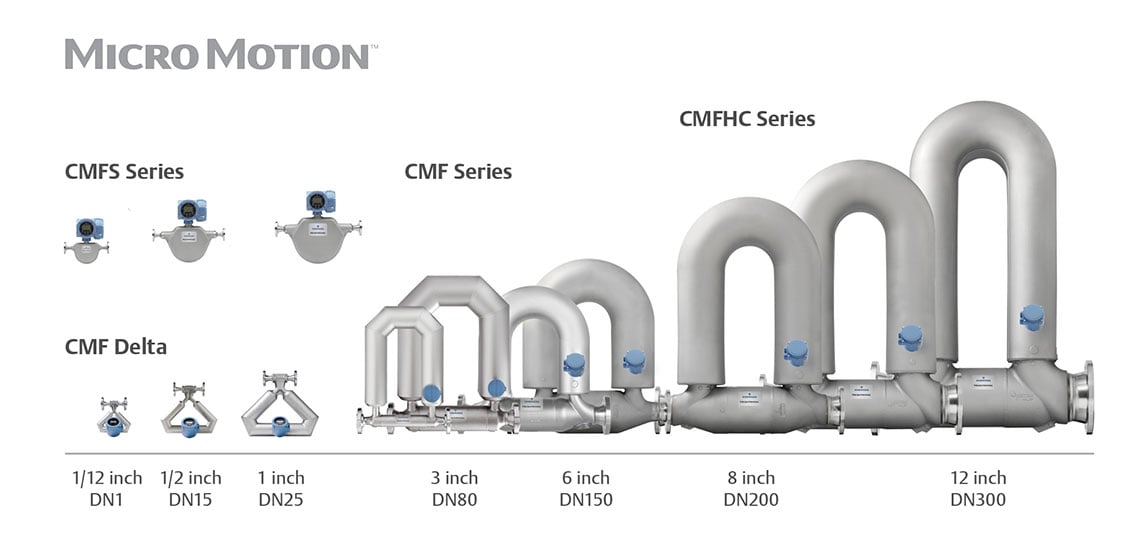
Coriolis meters typically have higher upfront costs than simpler flow technologies. They can also be more sensitive to external vibration, requiring careful installation and support. In very large pipe sizes, Coriolis meters may become impractical due to size, weight, or cost considerations.
Certain multiphase flows or entrained gas conditions can affect measurement stability if not properly managed. These challenges do not negate the value of Coriolis meters, but they highlight the importance of correct sizing, installation, and application expertise.
For plant managers, the key is evaluating total cost of ownership rather than initial purchase price. In many cases, the long-term efficiency gains and reduced maintenance justify the investment.
What Are Common Problems with Mass Flow Meters?
Electrical noise, grounding issues, or improper configuration can lead to signal disturbances. In facilities with aging infrastructure, these issues are often related to system level design rather than the instrument itself.
Routine inspection, proper configuration, and use of diagnostic tools help identify these problems early. Modern Coriolis meters often include self-diagnostics that alert maintenance teams to changes in sensor health, supporting predictive maintenance strategies.
Lifecycle Considerations for Coriolis and Density Meters
Modernization projects often reveal opportunities to replace older volumetric technologies with Coriolis meters. These upgrades simplify system architecture and improve data quality, but they require careful planning to avoid disruption.
Reliability leaders should consider how Coriolis meters fit into broader asset management strategies. Integrating measurement data with control and maintenance systems allows organizations to move from reactive to proactive decision making.
Supporting Coriolis Flow Solutions with Proconex
Selecting and maintaining Coriolis flow and density meters requires more than product knowledge. It requires understanding how measurement integrates with control strategies, maintenance practices, and long term operational goals. Proconex supports organizations by helping them apply Coriolis technology where it delivers the most value, while managing installation, configuration, and lifecycle considerations.
Learn more about how Proconex supports mass flow and density measurement by exploring our Coriolis flow solutions at
https://www.proconexdirect.com/products/measurement-instrumentation/flow/coriolis/