
TL;DR
- Isolation valve failures are a major operational risk, leading to safety incidents, unplanned downtime, and higher maintenance costs in demanding industries.
- Traditional valve designs struggle under extreme pressure, temperature, and corrosive conditions, often failing to provide reliable shutoff.
- Triple offset butterfly valves solve these challenges with a frictionless, metal-to-metal sealing design that delivers zero leakage, longer service life, and lower torque.
- When integrated with modern control and monitoring systems, triple offset valves improve uptime, safety, and lifecycle cost performance, making them a strategic investment for high-performance operations.
Isolation Failures Are a Hidden Operational Risk
Traditional valve designs struggle under extreme conditions. High pressure, thermal cycling, and corrosive media expose weaknesses in sealing and mechanical integrity. This is where the triple offset butterfly valve provides a distinct advantage. Designed for zero leakage and long-term durability, it addresses many of the limitations associated with conventional isolation valves.
Why Triple Offset Butterfly Valve Performance Matters in Modern Operations
Uptime and Reliability
Isolation valves are critical during shutdowns, maintenance, and emergency scenarios. A valve that fails to seal properly can extend downtime and complicate maintenance procedures.Safety and Compliance
In high-pressure and high-temperature systems, valve leakage can create hazardous conditions. Reliable isolation is essential for protecting personnel and meeting regulatory requirements.Cost Control
Frequent valve maintenance and replacement increase operational costs. Durable valve designs reduce lifecycle expenses and improve overall asset performance.Efficiency and Digital Transformation
Facilities are integrating advanced process control systems and monitoring platforms. Valve performance data is increasingly used to support predictive maintenance and optimize system performance.How Triple Offset Butterfly Valve Technology Works
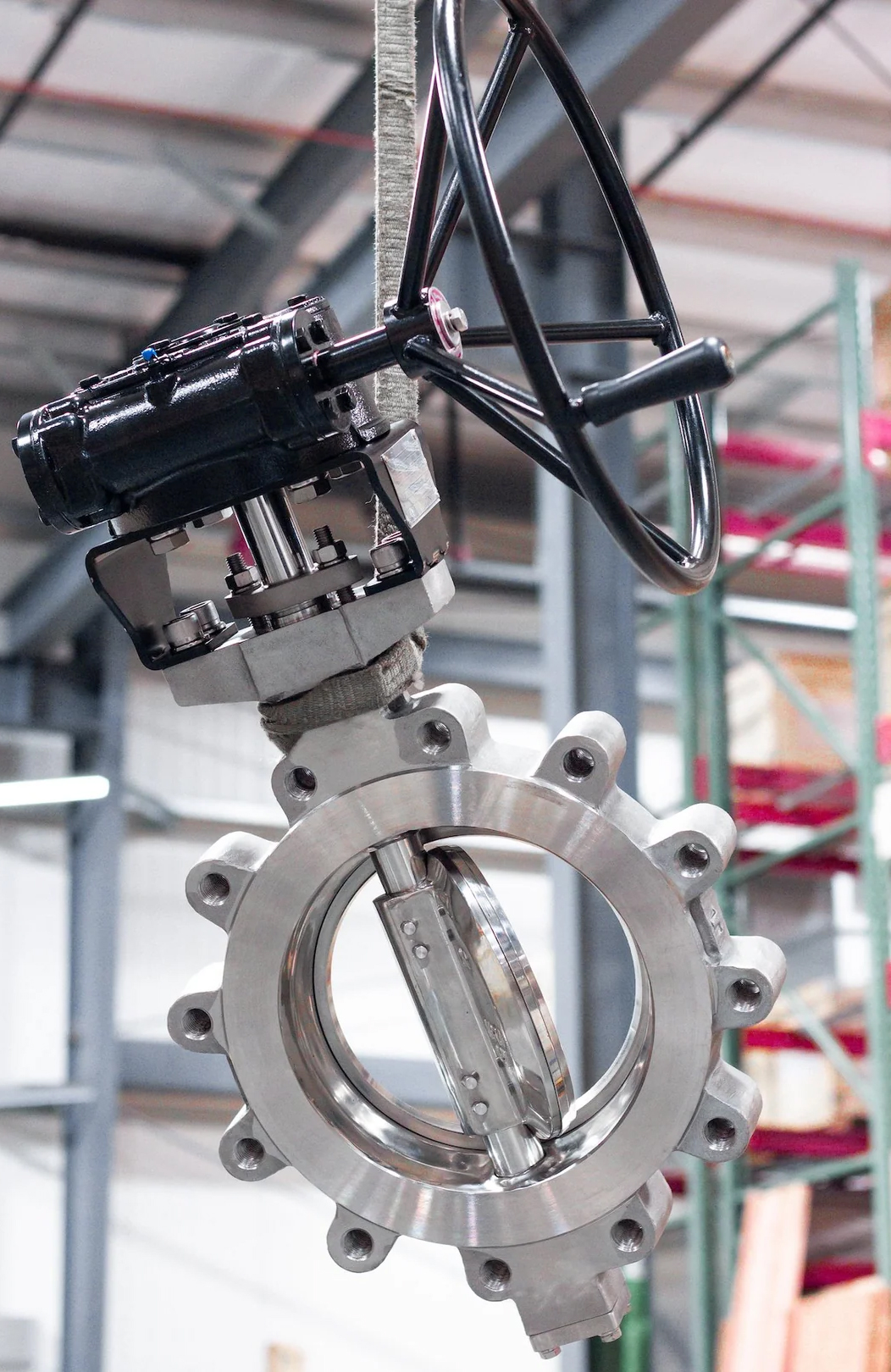
A triple offset valve differs from traditional butterfly valves through its unique geometry. The design eliminates friction between the sealing surfaces during operation, which significantly improves performance and longevity.
The Three Offsets Explained
- First Offset: The shaft is positioned behind the valve disc, allowing the disc to move away from the seat during opening
- Second Offset: The shaft is offset from the pipeline centerline, creating a cam-like motion that reduces contact between sealing surfaces
- Third Offset: The sealing surfaces are conical rather than circular, enabling a true metal-to-metal seal without rubbing
Key Components
- Metal-seated valve body designed for high pressure and temperature
- Precision-machined disc with conical sealing surface
- Actuator for automated operation
- Positioners and instrumentation for integration with control systems
Data Flow and Integration
In modern systems, these valves are integrated into control architectures:- Control systems issue commands based on process conditions
- Actuators adjust valve position accordingly
- Sensors provide feedback on valve position and system conditions
- Monitoring platforms analyze performance data for maintenance planning
Advanced valve solutions from Emerson, including the Vanessa series, are engineered to integrate with digital systems, enabling improved visibility and diagnostics.
5 Benefits of Triple Offset Butterfly Valve Technology
1. Zero Leakage Performance
The metal-to-metal sealing design provides bidirectional tight shutoff. This is critical in applications where leakage cannot be tolerated.
2. Reduced Wear and Longer Service Life
The absence of friction during operation minimizes wear on sealing surfaces. This extends valve life and reduces maintenance requirements.
3. High Temperature and Pressure Capability
Triple offset valves are designed to operate in extreme conditions where soft-seated valves would fail.
4. Lower Torque Requirements
The cam-like motion reduces operating torque, enabling smaller actuators and more efficient operation.
5. Improved Operational Efficiency
Reliable isolation and reduced maintenance contribute to overall system efficiency and lower lifecycle costs.
Best Practices for Triple Offset Valve Performance
- Select valves based on actual process conditions, including temperature and pressure
- Ensure proper installation and alignment to maintain sealing integrity
- Integrate valve data into centralized monitoring systems
- Use predictive maintenance strategies to extend service life
- Regularly inspect valves for signs of wear or damage
- Align valve selection with broader digital transformation initiatives
Implementing advanced valve technology requires expertise in selection, integration, and lifecycle support.
Proconex provides:
- Engineering support to match valve design with process requirements
- Field services to ensure proper installation and commissioning
- Integration with control systems and monitoring platforms
For facilities seeking to improve isolation reliability, exploring Vanessa triple offset valve solutions provides a practical path forward.
In Conclusion: Reliable Isolation Is Essential for High-Performance Operations
The triple offset butterfly valve provides a proven solution for achieving tight shutoff, reducing maintenance, and improving system reliability. Its advanced design addresses the challenges of modern industrial processes.
For organizations focused on uptime, safety, and long-term performance, investing in the right valve technology is a strategic decision that delivers measurable operational benefits.